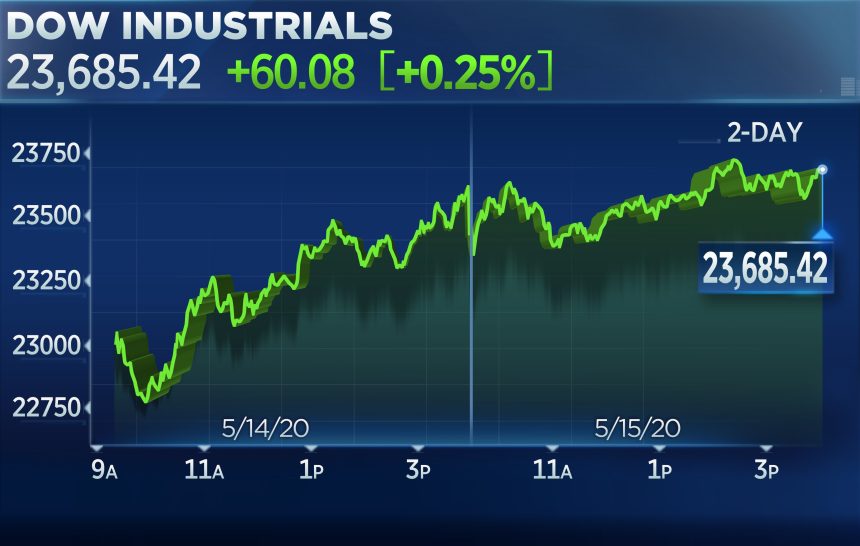
The Dow Jones Industrial Average is one of the most recognized stock market indexes in the world. For more than a century, it has served as a simple way for people to understand how the stock market is performing. When news channels report that the market is up or down for the day, they often refer to the Dow. Because of its long history and strong reputation, the index has become an important indicator of the health of the United States economy.
Many investors, financial analysts, and everyday individuals follow the Dow Jones Industrial Average to get a quick overview of market trends. While it is not the only stock index available, it remains one of the most widely discussed. Understanding how it works can help both new and experienced investors make more informed decisions.
What Is the Dow Jones Industrial Average?
The Dow Jones Industrial Average, often called the Dow or DJIA, is a stock market index that tracks the performance of 30 large publicly traded companies in the United States. These companies come from different industries such as technology, finance, healthcare, consumer goods, and manufacturing.
The index was created in 1896 by Charles Dow, a financial journalist and co-founder of Dow Jones & Company. At the time, the index included only 12 companies, most of them from the industrial sector. Over the years, the list expanded to 30 companies, reflecting the changing structure of the American economy.
Today, the companies included in the Dow Jones Industrial Average are considered leaders in their industries. These businesses are usually large, stable, and well-known brands. Because of this, the index often gives a good picture of how major corporations are performing.
How the Dow Jones Industrial Average Works
Unlike some other stock market indexes, the Dow Jones Industrial Average is price weighted. This means that companies with higher stock prices have a greater impact on the index movement than companies with lower stock prices.
For example, if a company with a high share price experiences a large increase or decrease, it can significantly affect the overall index value. This system is different from indexes like the S&P 500, which are based on market capitalization.
To calculate the index, the prices of all 30 companies are added together and then divided by a special number known as the Dow divisor. This divisor helps maintain consistency when companies split their stock or when changes occur in the index.
Although the calculation may seem technical, the main idea is simple. The Dow Jones Industrial Average reflects whether the stock prices of these major companies are rising or falling.
Companies Included in the Dow
The companies listed in the Dow Jones Industrial Average are carefully selected by editors from The Wall Street Journal. They look for companies that are well established, financially stable, and widely respected in the market.
Some well-known companies that have been part of the Dow include major technology firms, global consumer brands, and financial institutions. These companies often represent the strength and innovation of the American economy.
However, the list is not permanent. When industries change or companies lose influence, they may be replaced by others that better represent modern economic trends. This keeps the Dow Jones Industrial Average relevant as the market evolves.
Why Investors Follow the Dow
Many investors pay close attention to the Dow Jones Industrial Average because it offers a quick snapshot of the stock market. When the Dow rises, it usually signals positive investor confidence and strong corporate performance. When it falls, it may indicate uncertainty or economic challenges.
The index also plays a role in shaping public perception of the economy. Headlines often mention how many points the Dow gained or lost in a day. While this does not tell the full story of the market, it provides a clear and easy metric for understanding market direction.
For long term investors, tracking the Dow Jones Industrial Average can help identify broader economic trends. Although the index contains only 30 companies, these businesses are influential enough to reflect major shifts in economic activity.
Dow Jones Industrial Average vs Other Indexes
While the Dow Jones Industrial Average is famous, it is not the only important market index. Investors also follow indexes such as the S&P 500 and the Nasdaq Composite.
The S&P 500 tracks 500 large companies and uses a market capitalization weighting system. Because it includes more companies, many analysts believe it provides a broader view of the market.
The Nasdaq Composite focuses heavily on technology companies and includes thousands of stocks listed on the Nasdaq exchange. This index is often used to measure the performance of the technology sector.
Despite these alternatives, the Dow Jones Industrial Average remains one of the most recognized symbols of the stock market. Its long history and simple structure make it easy for the public to understand.
The Historical Importance of the Dow
The Dow Jones Industrial Average has witnessed many important moments in financial history. It tracked the growth of American industry during the early twentieth century and experienced dramatic declines during events such as the Great Depression.
Over time, the index recovered and continued to grow alongside the expanding global economy. It also reflected major financial events like the 2008 financial crisis and the market volatility during the COVID-19 pandemic.
These historical movements show how closely the Dow Jones Industrial Average is connected to economic conditions. When the economy grows, corporate profits often increase, pushing the index higher. When economic challenges arise, stock prices may fall.
Limitations of the Dow Jones Industrial Average
Although the Dow Jones Industrial Average is widely respected, it does have some limitations. Because it includes only 30 companies, it cannot represent every sector of the economy.
Another limitation is its price weighted structure. A company with a high stock price may influence the index more than a company with a larger overall market value. Some analysts believe this method does not always reflect the true size or importance of a company.
Despite these concerns, the index continues to play a major role in financial reporting and investor discussions. It remains one of the easiest ways for people to follow daily market activity.
How Beginners Can Use the Dow
For beginners entering the world of investing, the Dow Jones Industrial Average can be a helpful starting point. Watching how the index moves each day can provide insights into market sentiment and economic developments.
New investors can also learn about the companies within the index. Studying these businesses helps people understand different industries, corporate strategies, and long term market trends.
However, experts often recommend that investors look beyond a single index. Combining information from several market indicators provides a clearer and more complete picture of financial conditions.
Final Thoughts on the Dow Jones Industrial Average
The Dow Jones Industrial Average remains one of the most influential financial indicators in the world. For more than a hundred years, it has helped investors, analysts, and everyday individuals understand the direction of the stock market. Even though other indexes provide broader coverage, the Dow continues to hold a special place in financial discussions.
By following the Dow Jones Industrial Average, investors can gain insight into the performance of major corporations and the overall strength of the economy. Whether someone is new to investing or already experienced in the market, understanding how this historic index works can provide valuable knowledge for making smarter financial decisions.