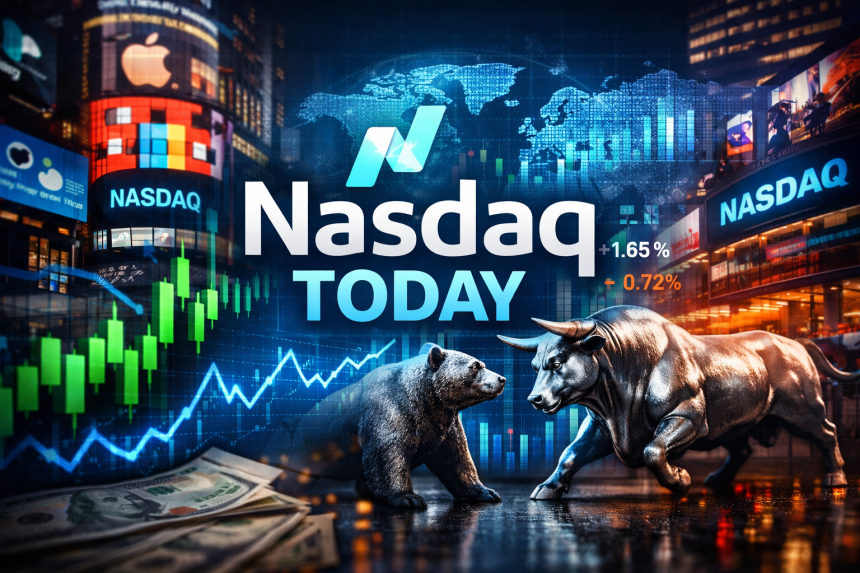
The stock market changes every minute, and many investors keep a close eye on nasdaq today to understand where technology stocks and growth companies are heading. The Nasdaq is one of the most watched stock market indexes in the world because it includes some of the largest technology companies. When people talk about the direction of the tech sector, they often look at how the Nasdaq is performing.
For beginners and experienced investors alike, following the Nasdaq can offer useful insights into market sentiment, innovation trends, and investor confidence. In this article, we will explore what the Nasdaq represents, what influences its daily movement, and why people search for updates about nasdaq today.
Understanding Nasdaq Today and Why It Matters
When someone searches for nasdaq today, they usually want to know how the Nasdaq Composite or Nasdaq-100 index is performing during the current trading session. These indexes track thousands of companies listed on the Nasdaq Stock Exchange, many of which belong to the technology sector.
The Nasdaq Composite includes more than 3,000 companies, ranging from small startups to global giants. The Nasdaq-100, on the other hand, focuses on the 100 largest non-financial companies listed on the exchange. Companies like Apple, Microsoft, Amazon, and NVIDIA have a significant influence on the index.
Because technology companies play a large role in the Nasdaq, the index is often considered a reflection of innovation and growth in the modern economy. When the Nasdaq rises, it often signals strong performance in the tech sector. When it falls, it may reflect concerns about economic conditions, interest rates, or company earnings.
Key Factors That Influence Nasdaq Today
Several factors can affect the movement of the Nasdaq on any given day. Investors watch these factors closely to understand why the market is moving up or down.
1. Technology Company Earnings
Quarterly earnings reports from major tech companies have a strong impact on the Nasdaq. When companies report strong revenue growth or better-than-expected profits, the index often moves higher. However, disappointing earnings can quickly push the market downward.
Large companies carry significant weight in the index, so even a single earnings report from a major firm can influence the entire market.
2. Interest Rates and Inflation
Interest rates are one of the most important drivers of the stock market. When central banks raise rates to control inflation, borrowing becomes more expensive. Growth companies, which dominate the Nasdaq, are particularly sensitive to these changes because they often rely on future earnings expectations.
When interest rates rise, investors sometimes shift money away from tech stocks and toward safer investments. This is why inflation data and central bank decisions can quickly impact nasdaq today.
3. Economic Data
Economic indicators such as employment numbers, consumer spending, and GDP growth can influence the Nasdaq. Strong economic data often boosts investor confidence, while weak data can create uncertainty.
For example, if job growth slows or consumer spending drops, investors may worry about future company profits. That uncertainty can lead to declines in the market.
4. Global Events
Global events also play a role in daily market movements. Political developments, international conflicts, supply chain disruptions, and trade policies can all affect investor sentiment.
Because technology companies operate worldwide, international developments often have a direct impact on their business operations. This means global news can influence the direction of the Nasdaq.
Why Investors Track Nasdaq Today
Many investors monitor the Nasdaq daily because it provides a quick snapshot of how growth stocks are performing. Day traders, long-term investors, and financial analysts all use Nasdaq data to guide their decisions.
Some people track the Nasdaq because they invest in exchange-traded funds (ETFs) that follow the index. Others watch it because their retirement accounts include technology stocks. In both cases, understanding the daily performance of the Nasdaq helps investors stay informed about their portfolios.
Another reason people search for nasdaq today is to compare its performance with other major indexes. The Dow Jones Industrial Average and the S&P 500 track different groups of companies, so comparing these indexes can reveal broader market trends.
Technology Trends Shaping the Nasdaq
The Nasdaq is heavily influenced by emerging technologies. Over the years, new industries have helped drive growth in the index.
Artificial intelligence is currently one of the biggest trends shaping the market. Companies developing AI software, cloud computing platforms, and advanced chips have attracted significant investor attention. This surge in interest has pushed many technology stocks higher.
Another important trend is the expansion of cloud computing services. Businesses around the world rely on cloud platforms to store data and run applications. Companies that provide these services have experienced strong growth, which has supported the overall performance of the Nasdaq.
Electric vehicles, renewable energy technologies, and semiconductor innovation also play a role in shaping the index. As these industries grow, the companies leading them often become major contributors to the Nasdaq.
Risks Associated with Nasdaq Investing
While the Nasdaq offers exposure to some of the fastest-growing companies in the world, it also carries certain risks. Because the index is heavily concentrated in technology stocks, it can be more volatile than other market indexes.
Rapid innovation means companies must constantly adapt to remain competitive. A business that dominates today may face new competition tomorrow. Investors should keep this in mind when making investment decisions.
Market sentiment can also shift quickly. If investors suddenly become cautious about growth stocks, the Nasdaq may experience sharp declines. This is why diversification remains an important strategy for managing risk.
Long Term Outlook for Nasdaq
Despite short-term fluctuations, the long-term outlook for the Nasdaq has historically been positive. Technology continues to play an increasingly important role in modern life. From smartphones and cloud computing to artificial intelligence and biotechnology, innovation drives economic growth.
Many analysts believe technology will remain a central part of the global economy for decades to come. As new industries develop, the Nasdaq is likely to continue evolving as well.
However, long-term investors should remember that markets move in cycles. Periods of rapid growth may be followed by corrections or slower performance. Patience and research are essential for navigating these cycles.