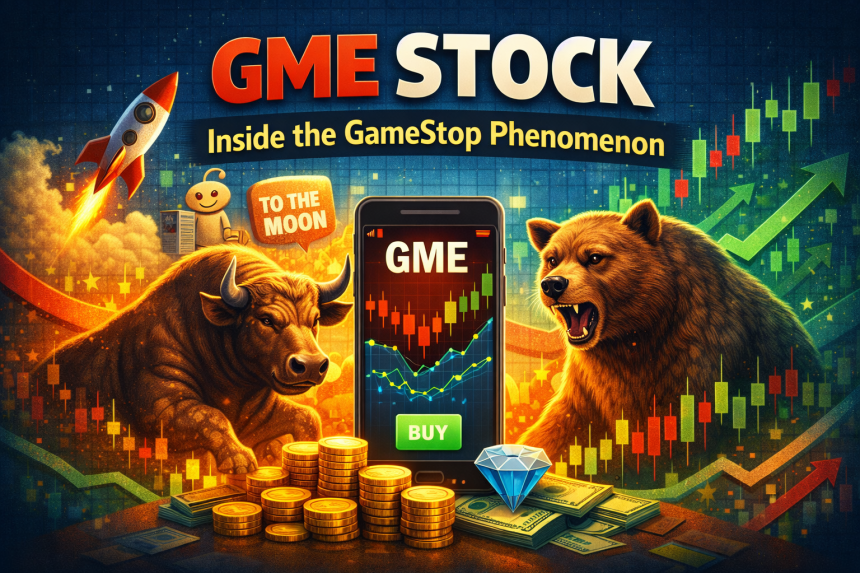
The story of gme stock is one of the most fascinating chapters in modern financial markets. What began as a struggling video game retailer turned into a global conversation about retail investors, online communities, and the power of social media in the stock market. Investors who once overlooked GameStop suddenly found themselves watching one of the most dramatic stock price movements in recent history.
For many people, the rise of GameStop shares was their first introduction to concepts like short selling, market volatility, and online investing communities. Even today, the discussion around GameStop stock, meme stocks, and retail investing continues to attract new investors who want to understand what happened and what it means for the future of the market.
The Background of GameStop and GME Stock
GameStop is a company that focuses on selling video games, gaming consoles, and accessories. For years it operated primarily through physical retail stores located in shopping malls and cities across the United States and other countries.
As digital game downloads became more popular, many investors believed the company’s traditional retail model would struggle. Because of this belief, several hedge funds began heavily shorting gme stock, expecting the price to fall further.
Short selling means investors borrow shares and sell them with the expectation that the price will decline. If the price drops, they buy back the shares at a lower value and keep the difference as profit.
However, this strategy eventually triggered one of the most unexpected events in stock market history.
The Short Squeeze That Changed the Market
The turning point for gme stock came in early 2021. Retail investors from online forums and trading communities began noticing that a large percentage of GameStop shares had been shorted by hedge funds.
Many of these investors believed that if enough people bought the stock at the same time, the price would rise dramatically. This would force short sellers to buy back shares at higher prices to cover their positions.
When this situation occurs, it is known as a short squeeze.
As more retail investors purchased shares, the price of GameStop stock began rising quickly. This surge forced many hedge funds to close their short positions, which pushed the price even higher. The rapid increase captured worldwide attention and brought millions of new investors into the stock market.
The Role of Retail Investors
One of the most unique aspects of the gme stock phenomenon was the influence of individual investors. Traditionally, large institutions and hedge funds have held significant control over stock market movements.
However, during the GameStop surge, retail traders using commission free trading apps began working collectively. Through discussion forums and social media platforms, investors shared research, strategies, and market opinions.
This collective buying power demonstrated that individual investors could influence stock prices on a large scale. For many people, the GameStop story became a symbol of retail investor empowerment.
While some investors made significant profits, others experienced large losses as the price fluctuated dramatically.
Why GME Stock Became a Meme Stock
The term meme stock became widely known during the GameStop surge. Meme stocks are shares that gain popularity through social media discussions rather than traditional financial analysis.
GameStop became one of the most famous examples because its rise was fueled by online communities. Investors created memes, videos, and discussions that encouraged others to join the movement.
While traditional investors focused on company earnings and financial performance, meme stock investors often focused on market sentiment and community support.
This new style of investing created both excitement and controversy within financial markets.
Volatility and Risk in GME Stock
One important lesson from the GameStop story is the role of volatility in the stock market. Volatility refers to how quickly and dramatically a stock price moves.
During the peak of the GameStop surge, gme stock experienced extreme price swings within a single day. Some investors saw their portfolios grow rapidly, while others faced sudden losses.
This level of volatility highlighted the importance of understanding risk before investing. Markets can move unpredictably, especially when strong emotions and social media influence trading behavior.
For new investors, the GameStop event served as a reminder that stock investing always carries risk.
The Transformation of GameStop
While much of the attention focused on trading activity, GameStop itself began working on transforming its business model.
Under new leadership, the company started exploring ways to expand beyond traditional retail gaming stores. Efforts included developing stronger online sales platforms and exploring digital technology opportunities.
Many investors began discussing the long term potential of GameStop stock, not just its short term price movements. Some believed the company could reinvent itself as a modern technology driven gaming brand.
Although the outcome remains uncertain, the company’s strategic shift has kept investors interested in its future.
Media Attention and Market Debate
The rise of gme stock sparked debates across financial media, government institutions, and regulatory agencies. Experts questioned whether market rules were prepared for the influence of online investor communities.
Some analysts argued that retail investors were creating unhealthy market speculation. Others believed the movement exposed weaknesses in hedge fund strategies and market fairness.
Regulators also examined the situation to determine whether changes to trading rules were necessary. The GameStop episode forced many financial institutions to reconsider how modern markets operate.
Even years later, the discussion continues to shape conversations about transparency and investor access.
Lessons Investors Learned
The story of gme stock taught investors several important lessons about the stock market.
First, markets are influenced by psychology as much as financial fundamentals. Investor sentiment can drive prices higher or lower regardless of traditional valuation methods.
Second, online communities now play a powerful role in shaping market narratives. Social media platforms allow investors to share information instantly with millions of people.
Third, risk management is essential. Rapid price increases may attract attention, but they can also lead to sudden corrections.
For beginners entering the market, these lessons highlight the importance of research, patience, and responsible investing strategies.
The Future Outlook for GME Stock
Looking ahead, investors continue to watch the performance of GameStop stock closely. Some traders remain optimistic that the company’s transformation efforts will strengthen its long term position in the gaming industry.
Others view the stock mainly as a symbol of retail investor culture rather than a traditional investment opportunity.
The future of gme stock will likely depend on several factors including company performance, leadership decisions, and broader market conditions. While the dramatic events of the past may not repeat in the same way, the influence of the GameStop story on financial markets will likely remain for many years.
Conclusion
Few stocks have captured public attention the way GameStop did. What started as a struggling retailer became a global financial story involving retail investors, hedge funds, and social media communities.
The rise of gme stock showed how quickly market narratives can change and how powerful collective investor action can be. At the same time, it reminded investors that markets can be unpredictable and volatile.
For anyone interested in understanding modern investing, the story of gme stock provides valuable insight into how technology, community influence, and financial markets now intersect in ways that were almost unimaginable just a decade ago.