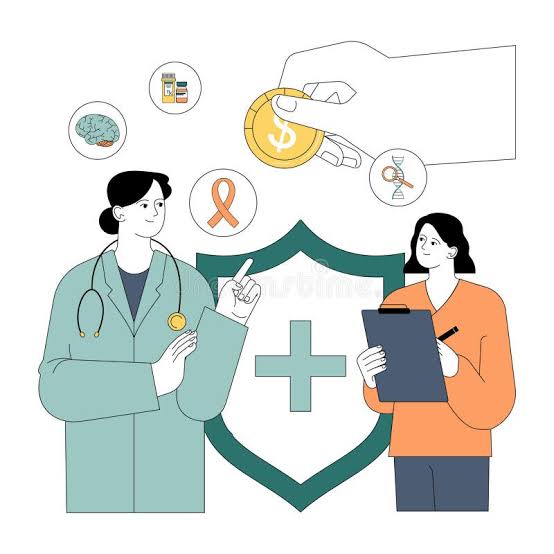
Healthcare financing models shape the way people access medical care, how hospitals and clinics operate, and how governments manage public health spending. Every country needs a system that collects money, pools resources, and pays healthcare providers in a fair and sustainable way. Without a strong financing structure, even the best doctors, hospitals, and medical technologies can become difficult for ordinary people to reach.
Healthcare is not just another service. People need it during emergencies, chronic illness, childbirth, old age, and unexpected health crises. The challenge is that medical care can be expensive, and most people cannot predict when they will need it. This is why financing models matter. They decide whether care is paid for through taxes, insurance premiums, direct payments, employer contributions, or a mix of different sources.
A good healthcare financing system does more than pay bills. It protects families from financial hardship, supports preventive care, improves health outcomes, and keeps the healthcare system stable. Different countries use different approaches depending on their income level, population size, political priorities, and public health needs.
Healthcare Financing Models and Why They Matter
Healthcare financing models are the methods used to raise, manage, and spend money for health services. These models influence who pays, how much they pay, what services are covered, and who receives care. In simple terms, healthcare financing answers three major questions: where does the money come from, how is it pooled, and how are services paid for?
The first part is revenue collection. This may include general taxes, payroll taxes, private insurance premiums, employer contributions, donor funding, or out-of-pocket payments from patients. The second part is pooling, which means combining funds so the financial risk is shared across a large group of people. The third part is purchasing, where the collected funds are used to pay hospitals, doctors, pharmacies, and other healthcare providers.
When these three parts work well together, people are more likely to receive care without facing extreme financial pressure. When they are weak or poorly managed, patients may delay treatment, avoid hospitals, or fall into debt because of medical costs.
1. Tax-Based Healthcare Financing
A tax-based healthcare financing model uses government revenue to fund healthcare services. Money is collected through income tax, sales tax, corporate tax, or other public revenue sources. The government then uses these funds to provide healthcare services, often through public hospitals and clinics.
This model is commonly linked with universal healthcare systems. In many cases, citizens can access essential services at little or no direct cost when they need care. The biggest strength of this model is fairness. Since funding comes from taxes, people contribute according to their ability to pay, while services are provided based on need.
However, tax-based systems also face challenges. They depend heavily on the government’s ability to collect enough revenue and manage it efficiently. If tax collection is weak, public hospitals may face shortages of staff, medicines, equipment, or funding. Long waiting times can also become a concern when demand is high and resources are limited.
Still, tax-based financing remains one of the most effective ways to expand access to healthcare, especially when a country wants to reduce the financial burden on patients.
2. Social Health Insurance
Social health insurance is another common model. In this system, employees, employers, and sometimes the government contribute to a public or semi-public health insurance fund. The fund is then used to pay for healthcare services.
This model is often based on payroll contributions. People who are formally employed pay a portion of their income, and employers also contribute. The money is pooled, meaning healthy and higher-income people help support those who are sick or have lower incomes.
One of the main benefits of social health insurance is that it creates a dedicated source of healthcare funding. Since contributions are specifically meant for health services, the system may be more stable than one that depends only on general government budgets.
The challenge is that this model works best in countries with a large formal workforce. In places where many people work informally, such as small traders, freelancers, farmers, or daily wage workers, it can be difficult to collect regular contributions. Governments often need to subsidize coverage for low-income families, unemployed people, and informal workers to make the system truly inclusive.
3. Private Health Insurance
Private health insurance is funded through premiums paid by individuals, families, or employers. People buy insurance plans from private companies, and those companies pay part or all of their medical costs depending on the policy.
This model can offer faster access, more provider choice, and additional services that may not be covered by public systems. Many employers use private insurance as a benefit to attract and retain workers. In some countries, private insurance works alongside public healthcare to reduce pressure on government facilities.
However, private insurance also has limitations. Premiums can be expensive, especially for older people or those with existing health conditions. Some plans may exclude certain treatments, limit coverage, or require patients to pay deductibles and co-payments. If private insurance becomes the main source of healthcare financing, it can increase inequality because wealthier people may receive better care than those who cannot afford coverage.
For this reason, private insurance often works best as a complementary model rather than the only path to healthcare access.
4. Out-of-Pocket Payments
Out-of-pocket payment is the simplest but riskiest healthcare financing method. In this model, patients pay directly for services at the time they receive care. This may include doctor consultation fees, hospital charges, medicine costs, lab tests, surgeries, and emergency treatment.
Many low- and middle-income countries still rely heavily on out-of-pocket payments. While this method may seem straightforward, it creates serious problems for families. A sudden illness or accident can force people to sell assets, borrow money, delay treatment, or skip care completely.
High out-of-pocket spending is one of the biggest barriers to healthcare access. It can push families into poverty and make preventive care less common. People may wait until their illness becomes severe because they cannot afford early treatment.
A strong healthcare financing system usually tries to reduce out-of-pocket payments by expanding insurance coverage, increasing public funding, and offering subsidized services for vulnerable groups.
5. Community-Based Health Financing
Community-based health financing is usually designed for rural areas, low-income groups, or communities where formal insurance systems are not well developed. Members of a community contribute small amounts of money into a shared fund. When someone needs healthcare, the fund helps cover the cost.
This model can improve access for people who might otherwise be excluded from formal insurance. It also builds trust because the system is often managed locally and designed around community needs.
However, community-based financing has limits. Small communities may not collect enough money to cover expensive treatments or major emergencies. The risk pool is usually small, which means one serious illness can place pressure on the entire fund. For long-term sustainability, community-based schemes often need support from government programs, NGOs, or larger insurance systems.
6. Employer-Based Healthcare Financing
Employer-based healthcare financing is common in countries where companies provide health benefits to their workers. Employers may pay for private insurance, contribute to social insurance funds, or directly cover healthcare costs.
This model can be useful for employees because it connects healthcare coverage with employment. It may also encourage companies to invest in worker wellness, preventive care, and occupational health.
The weakness is that coverage is tied to a person’s job. If someone loses employment, changes work, retires, or works in the informal sector, they may lose access to healthcare benefits. Employer-based financing can also leave out dependents, part-time workers, self-employed people, and unemployed individuals unless there are additional protections.
7. Donor-Funded Healthcare Financing
In some countries, international donors, development agencies, charities, and global health organizations help finance healthcare services. Donor funding may support vaccination programs, maternal health, disease control, emergency response, nutrition, or health infrastructure.
This model can be very important during crises or in countries with limited public revenue. It can help fill funding gaps and support programs that save lives.
The problem is sustainability. Donor priorities can change, funding can decrease, and programs may struggle if local governments cannot continue them. Donor funding is most effective when it supports long-term national health plans instead of creating separate systems that are difficult to maintain.
The Rise of Blended Healthcare Financing
Most countries do not use only one model. Instead, they combine several healthcare financing methods. A country may use tax revenue for public hospitals, social insurance for workers, private insurance for additional coverage, and donor funding for specific health programs.
This blended approach can be practical because no single model is perfect. Tax funding can support universal access. Social insurance can create stable contributions. Private insurance can offer extra choice. Community programs can reach underserved areas. Donor support can strengthen specific public health priorities.
The key is balance. If the system relies too much on out-of-pocket payments, people suffer financially. If it relies only on government funding without proper management, services may become overstretched. If it depends heavily on private insurance, inequality may increase.
A strong mixed model should protect low-income families, support quality care, and ensure that money is used efficiently.
What Makes a Healthcare Financing Model Successful?
A successful healthcare financing model should be fair, sustainable, efficient, and inclusive. Fairness means people contribute based on their ability to pay and receive care based on medical need. Sustainability means the system has enough reliable funding over time. Efficiency means money is not wasted through poor management, corruption, unnecessary procedures, or weak planning.
Inclusiveness is equally important. A healthcare system should not only serve formal workers or people who can afford private insurance. It should also protect children, elderly people, people with disabilities, low-income families, rural communities, unemployed individuals, and informal workers.
Good healthcare financing also supports preventive care. When people can afford checkups, vaccinations, screenings, and early treatment, the system saves money in the long run. Preventive care is usually much cheaper than treating advanced disease.
Technology can also improve financing systems. Digital health records, mobile payments, electronic insurance cards, and data tracking can reduce fraud, improve transparency, and make services easier to access. However, technology should support the system, not replace strong policy and good governance.
Challenges Facing Healthcare Financing Today
Healthcare costs are rising around the world. New medicines, advanced equipment, aging populations, chronic diseases, and higher patient expectations are putting pressure on health budgets. At the same time, many countries are still trying to expand coverage to people who have been left out.
Another major challenge is inequality. In many systems, wealthier people can access better hospitals and faster treatment, while poorer people depend on underfunded public services or pay directly from their pockets.
There is also the issue of quality. Financing healthcare is not only about making services available. It is also about making sure those services are safe, effective, respectful, and timely. A poorly funded system may offer access on paper but fail to deliver good care in practice.
Countries must also prepare for emergencies such as pandemics, natural disasters, and economic shocks. A strong financing model should be flexible enough to respond quickly when public health needs suddenly increase.
Final Thoughts
Healthcare financing models play a major role in shaping the strength, fairness, and future of any healthcare system. The best model is not always the most expensive one, but the one that protects people from financial hardship, gives them access to essential care, and uses resources wisely. Whether a country relies on taxes, insurance, employer contributions, community funds, or a blended system, the goal should remain the same: healthcare that is accessible, affordable, and reliable for everyone.