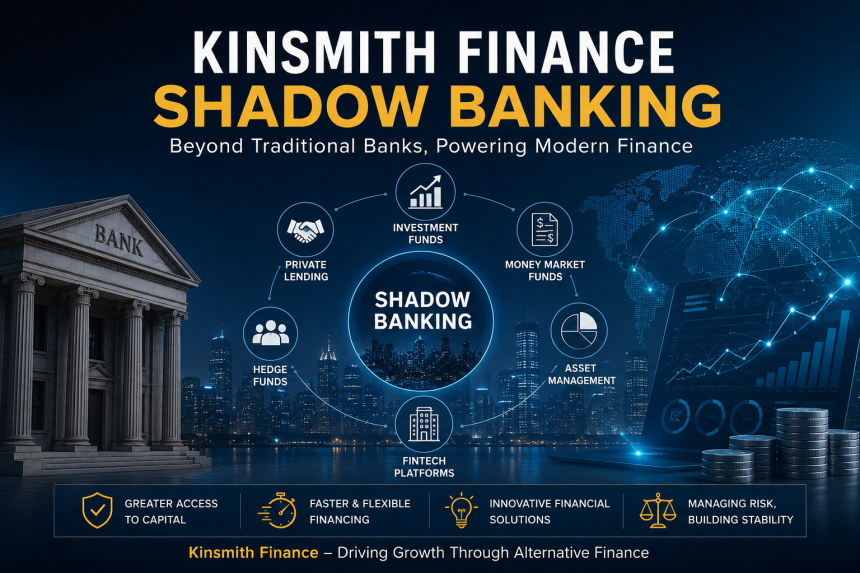
The global financial system has changed rapidly over the past two decades. Traditional banks are no longer the only institutions offering loans, investment products, and financial services. A new network of lenders, investment firms, hedge funds, and private credit companies has emerged outside the conventional banking framework. This growing ecosystem is known as shadow banking. As financial markets continue to evolve, companies like Kinsmith Finance are becoming increasingly relevant in discussions about alternative finance and modern lending structures.
Shadow banking may sound mysterious, but it plays a major role in today’s economy. From funding businesses to supporting real estate investments, shadow banking institutions help move capital across markets faster than traditional banks often can. At the same time, this sector raises concerns about regulation, transparency, and financial stability. Understanding how shadow banking works is essential for investors, businesses, and consumers who want to navigate the modern financial world with confidence.
What Is Shadow Banking?
Shadow banking refers to financial activities carried out by institutions that operate outside traditional banking regulations. These organizations provide services similar to banks, such as lending money, offering credit, or facilitating investments, but they are not regulated in the same way commercial banks are.
Examples of shadow banking institutions include hedge funds, private equity firms, money market funds, mortgage lenders, and private credit companies. Unlike traditional banks, these institutions usually do not accept deposits from consumers. Instead, they raise capital through investors, financial markets, or private funding channels.
The shadow banking system grew significantly after the 2008 global financial crisis. Many traditional banks faced stricter regulations, which created opportunities for alternative lenders to fill the gaps. Businesses seeking quick funding often turned to private lenders because they offered faster approval processes and more flexible terms.
Today, shadow banking has become a critical part of global finance. It supports economic growth by increasing access to credit and providing funding solutions that traditional banks may avoid.
Why Shadow Banking Continues to Grow
Several factors have contributed to the rise of shadow banking across global markets.
First, traditional banks have become more cautious with lending. Regulatory requirements introduced after the financial crisis forced banks to maintain higher reserves and reduce risky lending practices. While these rules improved stability, they also made borrowing more difficult for some businesses and individuals.
Second, investors are constantly searching for higher returns. Low interest rates in many countries pushed institutional investors toward alternative financial products. Shadow banking firms often provide attractive investment opportunities that promise stronger returns than conventional savings or bonds.
Technology has also accelerated the expansion of shadow banking. Digital lending platforms, fintech companies, and online investment services have made it easier for borrowers and investors to connect directly. This has reduced dependence on traditional banking channels.
Another important factor is speed. Businesses often need funding quickly to seize opportunities or manage operations. Alternative lenders can process loans faster because they typically face fewer regulatory procedures compared to commercial banks.
The Role of Kinsmith Finance in Modern Financial Discussions
Kinsmith Finance represents the broader shift toward alternative financial solutions and innovative lending practices. In today’s competitive economy, businesses increasingly look for flexible funding models that align with their operational needs. Traditional banking systems sometimes struggle to meet these demands due to strict approval standards and lengthy processing times.
Alternative finance companies help bridge this gap by offering customized lending structures, investment opportunities, and capital management solutions. This growing trend highlights why discussions around shadow banking and modern finance continue to gain attention.
As financial markets become more digital and decentralized, companies operating within alternative finance spaces are influencing how businesses access funding. The rise of private lending, structured finance, and non bank credit systems demonstrates how the financial landscape is changing beyond traditional institutions.
Benefits of Shadow Banking
Shadow banking offers several advantages that explain its growing popularity worldwide.
Greater Access to Credit
One of the biggest benefits is increased access to funding. Small businesses, startups, and borrowers with unconventional financial profiles often struggle to secure loans from traditional banks. Shadow banking institutions provide alternative financing options that support entrepreneurship and economic activity.
Faster Loan Approvals
Traditional banks may take weeks or even months to process applications. Alternative lenders usually operate with fewer bureaucratic layers, allowing them to approve and distribute funds more quickly.
Flexible Financial Products
Shadow banking institutions often create customized lending solutions tailored to specific industries or investment goals. This flexibility helps businesses access funding structures that traditional banks may not offer.
Investment Opportunities
Investors benefit from diversified financial products and potentially higher returns. Private credit funds, hedge funds, and alternative investment vehicles have attracted institutional investors looking for stronger performance.
Economic Growth
By expanding access to capital, shadow banking supports innovation, infrastructure projects, and business expansion. Many industries rely on alternative finance to fuel growth and development.
Risks Associated With Shadow Banking
Despite its advantages, shadow banking also carries significant risks. One major concern is the lack of regulatory oversight. Traditional banks are closely monitored by government authorities to ensure stability and consumer protection. Many shadow banking institutions operate with fewer restrictions, which can increase financial vulnerability.
Liquidity risk is another issue. Some shadow banking firms rely heavily on short term funding while investing in long term assets. If investors suddenly withdraw funds, these institutions may struggle to maintain operations.
Transparency can also be limited. Complex financial structures and investment products sometimes make it difficult for investors to fully understand the risks involved. During periods of economic uncertainty, this lack of clarity can contribute to market instability.
The 2008 financial crisis highlighted how interconnected shadow banking had become with the global economy. Mortgage backed securities and complex derivatives played a major role in triggering widespread financial collapse. Since then, regulators have increased scrutiny of non bank financial institutions, but concerns remain.
Cybersecurity is another growing challenge. As financial services move online, digital lenders and fintech companies face increasing threats from cyber attacks and data breaches. Protecting sensitive financial information has become a top priority across the industry.
Shadow Banking and the Future of Finance
The future of shadow banking will likely depend on how regulators balance innovation with financial stability. Governments around the world are working to improve oversight without limiting the benefits that alternative finance provides.
Fintech innovation will continue shaping the sector. Artificial intelligence, blockchain technology, and digital payment systems are transforming how financial services operate. These technologies can improve efficiency, reduce costs, and expand access to capital.
Private credit markets are also expected to grow. Many businesses prefer working with private lenders because they offer tailored financing solutions and faster decision making processes. Institutional investors continue allocating large amounts of capital toward private lending opportunities.
Sustainability is becoming another important factor. Investors increasingly seek environmentally and socially responsible financial products. Alternative finance firms are beginning to integrate sustainable investment principles into their operations and lending practices.
Cross border financing may also expand as digital platforms make international investment and lending more accessible. This could create new opportunities for businesses and investors worldwide.
How Businesses Can Navigate the Shadow Banking Sector
Businesses considering alternative financing should approach the shadow banking sector carefully. While these funding sources can provide valuable opportunities, due diligence is essential.
Companies should evaluate the reputation, transparency, and financial stability of any lender or investment partner. Understanding loan terms, interest rates, and repayment structures is critical before entering agreements.
Diversification is another smart strategy. Relying entirely on one funding source can increase financial risk. Many successful businesses combine traditional banking relationships with alternative financing options to create balanced capital structures.
Professional financial advice can also help organizations make informed decisions. Financial consultants and legal experts can identify risks, review agreements, and ensure compliance with relevant regulations.
Businesses should also stay informed about changing financial regulations and market conditions. The alternative finance industry evolves rapidly, and staying updated can help companies avoid potential challenges.
Conclusion
Shadow banking has become a powerful force within the global financial system. It offers businesses and investors greater flexibility, faster access to capital, and innovative funding solutions that traditional banks may not provide. At the same time, the sector introduces risks related to regulation, transparency, and financial stability.
As financial markets continue evolving, alternative finance companies such as Kinsmith Finance reflect the growing demand for modern lending and investment solutions. The rise of private credit, fintech innovation, and decentralized financial services shows that the future of finance will likely extend far beyond traditional banking institutions.
Understanding shadow banking is no longer just important for financial professionals. Businesses, investors, and everyday consumers all benefit from knowing how these systems operate and how they influence the broader economy. With responsible regulation and informed decision making, shadow banking can continue supporting economic growth while reducing the risks that have challenged financial markets in the past.