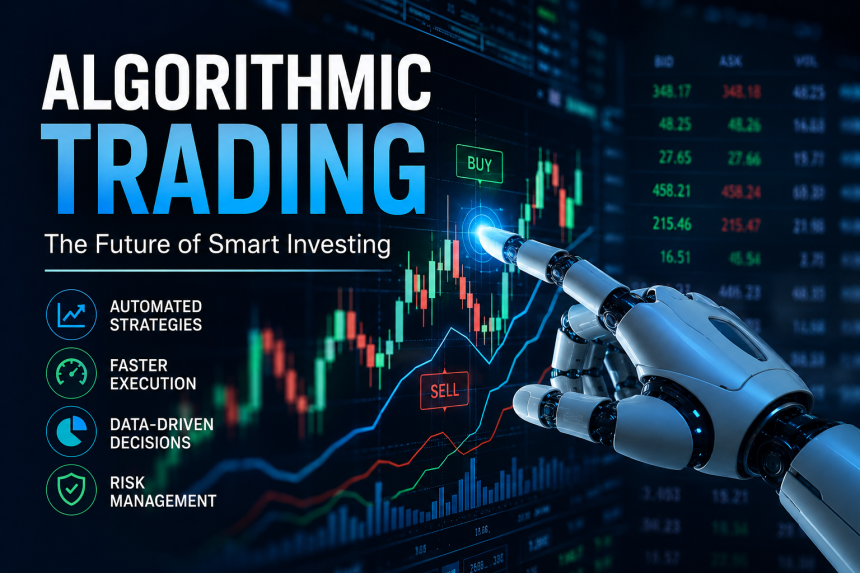
Financial markets have changed dramatically over the last two decades. Trading floors filled with shouting brokers have slowly been replaced by computer screens, advanced software, and automated systems that can execute trades within seconds. One of the biggest innovations behind this transformation is Algorithmic Trading. Today, hedge funds, banks, institutional investors, and even individual traders use automated systems to make smarter and faster trading decisions.
Algorithmic Trading refers to the use of computer programs and mathematical models to buy or sell financial assets automatically. These systems follow pre-defined rules based on price movements, timing, market trends, trading volume, or technical indicators. Instead of placing trades manually, traders rely on algorithms to execute orders with precision and speed.
The growing popularity of online trading platforms and financial technology has made algorithmic systems more accessible than ever. Traders are now using automation not only to reduce emotional decisions but also to improve efficiency and manage risks in volatile markets.
What is Algorithmic Trading?
Algorithmic Trading is a method of trading where computer programs analyze market data and execute trades automatically. The system follows specific instructions created by traders or developers. These instructions can be based on technical analysis, market conditions, price fluctuations, or statistical models.
For example, a trader may design a strategy that automatically buys a stock when its price moves above a certain level and sells it when the price drops below another level. Once the conditions are met, the software executes the trade instantly without human involvement.
The biggest advantage of this process is speed. Human traders may take several seconds or even minutes to react to market changes, while algorithms can process information and place trades in milliseconds.
Why Algorithmic Trading Has Become So Popular
The financial industry is becoming increasingly dependent on automation and data-driven decision making. Investors are looking for faster ways to analyze information and respond to market opportunities. This is one reason why Algorithmic Trading has gained massive attention across global markets.
Another major factor is emotional discipline. Many traders lose money because of fear, greed, or impulsive decisions. Automated trading systems eliminate emotional reactions by strictly following programmed rules.
Lower transaction costs also play a role in its popularity. Since algorithms can execute trades more efficiently, traders may reduce slippage and improve order execution. Large institutions especially benefit from this because they handle thousands of transactions daily.
The rise of artificial intelligence, machine learning, and cloud computing has further accelerated the growth of algorithmic systems. Modern software can now analyze historical data, detect patterns, and optimize trading strategies more effectively than traditional manual methods.
Different Types of Algorithmic Trading Strategies
There are many strategies used in automated trading systems. Each strategy depends on the goals, risk tolerance, and market approach of the trader.
Trend Following Strategies
Trend following is one of the most common approaches. Algorithms identify upward or downward market trends using indicators like moving averages, momentum signals, or price breakouts. The system enters trades based on the direction of the trend.
Arbitrage Trading
Arbitrage strategies take advantage of price differences between markets or exchanges. If an asset is priced differently in two locations, the algorithm buys from the cheaper market and sells in the more expensive one to capture profit.
Mean Reversion Strategies
This strategy assumes that asset prices eventually return to their average value over time. Algorithms monitor price deviations and execute trades when prices move too far from historical averages.
High Frequency Trading
High Frequency Trading involves executing thousands of trades within fractions of a second. These systems rely on ultra-fast computers and advanced market access to profit from tiny price changes.
Market Making
Market making algorithms continuously place buy and sell orders to provide liquidity to financial markets. These systems earn profits from the difference between bid and ask prices.
Benefits of Algorithmic Trading
There are several reasons why professional traders prefer automated systems over manual trading methods.
Faster Trade Execution
Algorithms can analyze data and place trades almost instantly. This speed allows traders to capture opportunities before market conditions change.
Reduced Emotional Trading
Human emotions often lead to mistakes in trading. Fear can prevent traders from entering good opportunities, while greed may encourage risky decisions. Algorithmic systems remove emotional interference by following pre-set rules.
Better Accuracy
Automated systems execute trades exactly as programmed. This reduces human errors that can happen during manual order placement.
Improved Backtesting
Traders can test strategies using historical market data before risking real money. Backtesting helps identify weaknesses and improve overall performance.
Ability to Monitor Multiple Markets
A human trader cannot monitor dozens of charts and assets simultaneously. Algorithms can analyze multiple markets at once and react instantly to changing conditions.
Risks and Challenges of Algorithmic Trading
Despite its advantages, Algorithmic Trading also comes with risks that traders should understand before using automated systems.
Technical Failures
Software bugs, internet disruptions, or server failures can create major trading problems. Even a small coding error may lead to significant financial losses.
Over Optimization
Some traders design strategies that perform perfectly on historical data but fail in live markets. This is known as overfitting and can create unrealistic expectations.
Market Volatility
Extreme market conditions can affect automated systems unexpectedly. Sudden price swings may trigger unwanted trades or large losses.
Regulatory Concerns
Financial authorities closely monitor algorithmic systems because high-speed trading can impact market stability. Regulations vary across countries and may affect trading operations.
High Competition
Large financial institutions invest millions into advanced trading technology. Retail traders often face intense competition from professional firms with superior infrastructure.
The Role of Artificial Intelligence in Algorithmic Trading
Artificial intelligence is changing the future of financial markets. Modern trading systems are becoming smarter through machine learning and predictive analytics.
AI-powered systems can analyze massive amounts of financial data, news reports, social media trends, and economic indicators in real time. These technologies help traders identify patterns that may not be visible through traditional analysis.
Machine learning models can also improve trading strategies by learning from previous market behavior. Over time, the system adapts and refines its decision-making process.
However, AI-based trading still requires human supervision. Markets are influenced by unpredictable economic events, political developments, and investor sentiment. Even advanced algorithms cannot guarantee profits in every situation.
How Beginners Can Start with Algorithmic Trading
Getting started with automated trading does not always require advanced programming knowledge. Many online platforms now offer user-friendly tools that allow beginners to build simple strategies.
The first step is learning the basics of financial markets and technical analysis. Traders should understand concepts like support and resistance, trend analysis, risk management, and trading psychology.
After that, beginners can explore platforms such as MetaTrader, TradingView, or Python-based trading frameworks. These tools allow users to test strategies using demo accounts before investing real capital.
Risk management is extremely important for new traders. No trading system is perfect, and losses are part of the process. Successful traders focus on consistency and long-term growth instead of chasing unrealistic profits.
It is also wise to start with simple strategies instead of complex automated systems. A basic moving average crossover strategy can help beginners understand how algorithmic models operate in real market conditions.
The Future of Algorithmic Trading
Technology continues to reshape the global financial industry. As computing power improves and access to market data becomes faster, Algorithmic Trading will likely become even more sophisticated in the coming years.
Artificial intelligence, big data analytics, and blockchain technology are expected to influence future trading systems significantly. Financial institutions will continue investing heavily in automation to gain competitive advantages in global markets.
Retail traders are also benefiting from increased accessibility. Advanced trading tools that were once available only to large hedge funds are now becoming available to individual investors at affordable prices.
At the same time, regulators will likely introduce stricter rules to ensure market stability and transparency. Balancing innovation with financial security will remain a major challenge for the industry.
In conclusion, Algorithmic Trading has transformed the way financial markets operate by combining technology, automation, and data analysis. It offers speed, efficiency, and improved decision making for traders across the world. While there are risks involved, the growing influence of artificial intelligence and automated systems suggests that Algorithmic Trading will continue shaping the future of modern investing for many years to come.