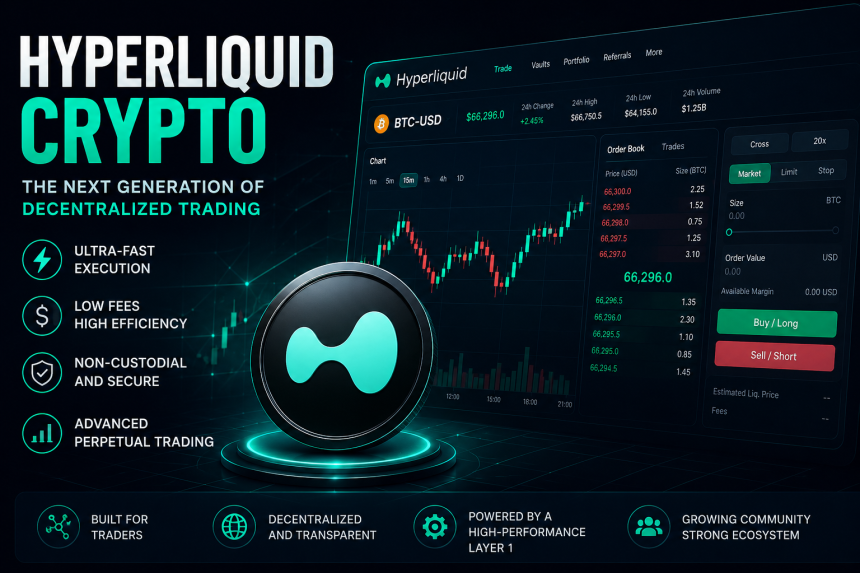
The crypto market changes fast, but every few years a platform appears that genuinely shifts the conversation. Recently, one of the biggest names making waves in decentralized finance is Hyperliquid. Traders, investors, and developers are all paying attention because the platform combines speed, transparency, and a user experience that feels closer to centralized exchanges while still keeping the benefits of decentralization.
As more people search for alternatives to traditional crypto exchanges, hyperliquid crypto has become a trending topic across trading communities. The platform is attracting attention not only because of its performance, but also because it represents a new direction for decentralized perpetual trading.
In this article, we will explore what Hyperliquid is, how it works, why traders are moving toward it, and what makes it different from many existing DeFi platforms.
What Is Hyperliquid Crypto?
Hyperliquid is a decentralized trading platform designed mainly for perpetual futures trading. Unlike many decentralized exchanges that rely heavily on slow blockchain execution, Hyperliquid uses its own custom Layer 1 blockchain architecture to deliver extremely fast order execution and lower latency.
For traders, this creates an experience that feels smooth and responsive. Many users compare the trading interface to centralized exchanges, but with the added advantage of self custody. That means traders maintain control over their funds rather than depositing them into a centralized company wallet.
The rise of hyperliquid crypto reflects a growing demand for platforms that combine security with performance. Crypto traders no longer want to choose between speed and decentralization. Hyperliquid attempts to provide both.
Why Hyperliquid Is Gaining Attention
There are several reasons why Hyperliquid has become one of the most discussed names in decentralized finance.
Fast Transaction Speeds
One of the biggest frustrations in DeFi trading has always been slow execution. Traders often miss opportunities because transactions take too long to confirm. Hyperliquid addresses this issue by optimizing its infrastructure specifically for trading activity.
This matters especially for futures traders who depend on precise entries and exits. A delay of even a few seconds can significantly affect profits.
Low Trading Fees
High gas fees have historically pushed many traders away from decentralized exchanges. Hyperliquid offers lower costs compared to several traditional DeFi competitors, making it more attractive for active traders.
Lower fees allow traders to execute more strategies without worrying that transaction costs will eat into profits.
User Friendly Interface
Many decentralized exchanges feel overly technical for beginners. Hyperliquid simplifies the process with a cleaner and more intuitive trading interface.
The platform appeals to experienced traders while also making decentralized trading easier for newcomers entering the crypto space.
Strong Community Support
Community growth plays a major role in crypto adoption. Hyperliquid has developed a passionate following on social media platforms and trading forums. Many users appreciate the transparency of the project and actively discuss updates, features, and trading opportunities.
The strong community around hyperliquid crypto has helped increase awareness across the broader digital asset industry.
How Hyperliquid Differs From Traditional Exchanges
Traditional centralized exchanges like Binance or Coinbase dominate crypto trading volume, but they also come with risks.
Users on centralized exchanges must trust the platform to hold their funds securely. History has shown that this model can sometimes fail due to hacks, mismanagement, or liquidity problems.
Hyperliquid follows a decentralized structure where users maintain greater control over assets. This reduces reliance on a central authority.
Another major difference is transparency. On decentralized platforms, blockchain activity can be verified publicly. Traders can view transactions and monitor system behavior more openly than on centralized exchanges.
At the same time, Hyperliquid attempts to preserve the trading efficiency people expect from centralized platforms. That balance is one of the main reasons the project has gained momentum.
The Role of Perpetual Futures in Crypto Trading
Perpetual futures are one of the most popular products in the cryptocurrency market. They allow traders to speculate on price movements without owning the underlying asset directly.
This form of trading attracts users because it offers leverage opportunities and the ability to profit in both rising and falling markets.
Hyperliquid focuses heavily on perpetual futures trading, positioning itself as a direct competitor to centralized derivatives exchanges.
As crypto markets mature, demand for decentralized perpetual trading continues to grow. Traders increasingly want financial freedom without giving up advanced trading tools.
The success of hyperliquid crypto highlights how important derivatives have become within the digital asset ecosystem.
Security and Transparency
Security remains one of the biggest concerns in crypto. Every year, billions of dollars are lost through hacks, scams, and exchange failures.
Hyperliquid attempts to reduce these risks through decentralization and transparent infrastructure. Since users control their wallets, the platform avoids some of the vulnerabilities associated with centralized custody.
Transparency also builds trust. Blockchain based systems allow users to independently verify activity rather than depending entirely on company statements.
While no crypto platform is completely risk free, many traders view decentralized systems as a safer long term direction for digital finance.
The Growing Popularity of DeFi
The rise of decentralized finance has completely changed how people interact with financial services. Users can now trade, lend, borrow, and earn yield without relying on banks or traditional intermediaries.
Hyperliquid exists within this broader DeFi movement. However, it specifically focuses on delivering a high performance trading experience.
Many DeFi platforms prioritize decentralization but struggle with usability. Hyperliquid tries to bridge that gap by combining blockchain principles with professional trading infrastructure.
As DeFi adoption continues expanding globally, platforms like Hyperliquid could become major players in the future of online finance.
Potential Risks Investors Should Consider
Although excitement around Hyperliquid is growing, investors should still approach the crypto market carefully.
Market Volatility
Cryptocurrency markets are highly volatile. Prices can move dramatically within minutes. This creates opportunities, but also substantial risks.
Leveraged trading, which is common on perpetual exchanges, can amplify losses very quickly.
Regulatory Uncertainty
Governments worldwide are still developing rules for digital assets and decentralized finance. Future regulations could impact how decentralized trading platforms operate.
Investors should stay informed about legal developments in their region.
Competition
The crypto industry moves quickly, and new platforms appear constantly. Hyperliquid faces competition from both centralized exchanges and other decentralized trading protocols.
Long term success will depend on continued innovation, user growth, and platform reliability.
Why Traders Are Watching Hyperliquid Closely
Crypto traders constantly search for platforms that provide an edge. Speed, liquidity, low fees, and security all influence where traders choose to execute transactions.
Hyperliquid has captured attention because it addresses several long standing problems within decentralized trading.
Many users believe the platform represents the next evolution of crypto exchanges. Others view it as part of a broader trend where decentralized infrastructure gradually competes with centralized financial systems.
Either way, the conversation around hyperliquid crypto continues growing as more traders explore alternatives to traditional exchanges.
Could Hyperliquid Shape the Future of Crypto Trading?
The cryptocurrency industry is still relatively young. Many experts believe the next generation of platforms will combine the strengths of centralized and decentralized systems.
Hyperliquid appears to be moving in that direction by focusing on performance, scalability, and user experience while maintaining blockchain based transparency.
If adoption continues increasing, the platform could influence how future decentralized exchanges are designed.
Success will ultimately depend on whether Hyperliquid can maintain reliability during periods of high trading activity while continuing to attract liquidity and users.
Final Thoughts on Hyperliquid Crypto
The rapid rise of hyperliquid crypto shows how quickly innovation continues within the blockchain industry. Traders today expect more than simple token swaps. They want fast execution, advanced trading tools, strong security, and full control over their assets.
Hyperliquid is gaining recognition because it addresses many of these demands in a way that feels modern and practical. While the crypto market always carries risks, the platform has positioned itself as one of the most interesting projects in decentralized trading today.
As decentralized finance evolves, Hyperliquid may become an important example of how blockchain technology can deliver both freedom and performance for the next generation of digital asset traders.