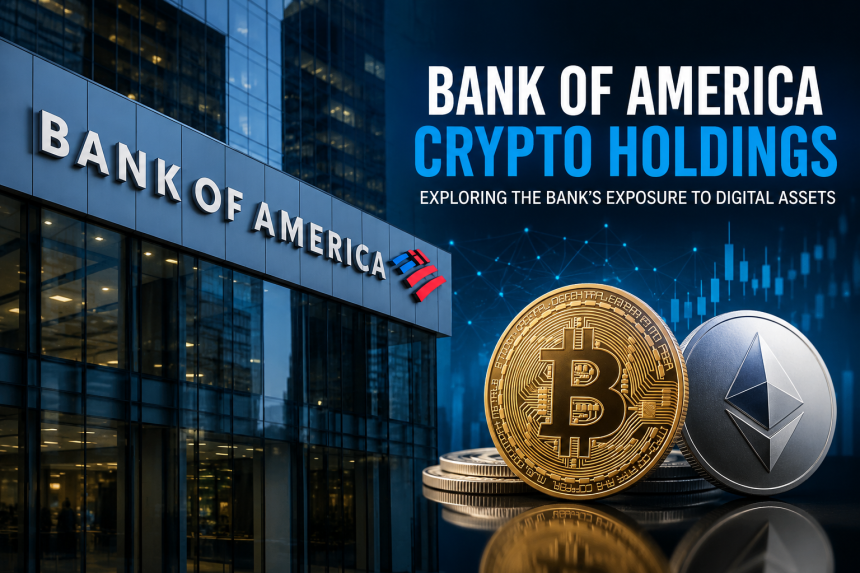
The topic of bank of america crypto holdings has become increasingly important as traditional financial institutions continue to interact with the evolving world of digital assets. While banks were once cautious or even skeptical about cryptocurrencies, the landscape has shifted significantly in recent years. Today, large banks such as Bank of America are closely watched for their indirect and direct exposure to crypto markets, blockchain technologies, and related financial instruments.
Understanding bank of america crypto holdings is not just about whether the bank owns Bitcoin or Ethereum directly. It also involves examining investment products, client services, blockchain partnerships, and the bank’s broader stance on crypto holdings as part of the global financial ecosystem.
The Growing Interest in Bank of America Crypto Holdings
Over the past decade, cryptocurrencies have transformed from a niche innovation into a major asset class. As institutional adoption grows, the discussion around bank of america crypto holdings has become more relevant for investors, analysts, and regulators.
Bank of America, one of the largest financial institutions in the United States, has taken a careful but increasingly engaged approach toward digital assets. Rather than making aggressive direct investments in crypto, the bank has focused on research, infrastructure, and client exposure to crypto holdings through regulated financial channels.
This strategy allows the bank to stay connected to the crypto economy while managing regulatory risk and market volatility. It also reflects a broader trend among global banks that prefer indirect participation in crypto holdings rather than holding volatile assets on their balance sheets.
Does Bank of America Hold Cryptocurrency Directly?
When analyzing bank of america crypto holdings, it is important to clarify a key point: Bank of America does not publicly report holding significant amounts of cryptocurrencies like Bitcoin or Ethereum on its balance sheet as treasury assets.
Instead, its exposure to crypto holdings is mostly indirect. This includes:
- Investment in blockchain research and development
- Offering banking services to crypto-related companies
- Exposure through client investments in crypto-linked financial products
- Participation in crypto-focused ETFs and futures markets through institutional channels
This cautious approach helps the bank maintain compliance with U.S. financial regulations while still participating in the growing demand for crypto holdings among institutional and retail investors.
Institutional Strategy Behind Crypto Holdings
The strategy behind bank of america crypto holdings reflects a broader institutional philosophy. Large banks are typically risk-averse and heavily regulated, meaning they cannot treat cryptocurrencies the same way hedge funds or private investors do.
Instead, Bank of America has focused on three major areas related to crypto holdings:
1. Research and Market Analysis
The bank has published multiple reports analyzing Bitcoin, blockchain adoption, and decentralized finance. These insights help clients understand the risks and opportunities within crypto holdings.
2. Client Services and Custody Solutions
While not fully acting as a crypto custodian in the same way as specialized firms, Bank of America has explored services that support institutional investors seeking exposure to crypto holdings.
3. Blockchain Integration
The bank has also tested blockchain technology for settlement systems, cross-border payments, and internal efficiency improvements, indirectly linking it to the infrastructure behind crypto holdings.
Regulatory Pressure and Crypto Holdings Exposure
One of the biggest reasons bank of america crypto holdings remain limited is regulation. U.S. financial authorities have strict rules governing how banks can interact with cryptocurrencies.
Because of these regulations, Bank of America must carefully manage its involvement in crypto holdings to avoid compliance risks. This includes ensuring transparency, avoiding direct custody of unregulated digital assets, and maintaining strong anti-money laundering controls.
Regulatory uncertainty has slowed down full-scale adoption of crypto holdings in traditional banking systems, but it has not stopped innovation entirely. Instead, it has pushed banks to innovate within safe boundaries.
Crypto Holdings and Market Opportunity
Despite caution, the potential of bank of america crypto holdings lies in the long-term growth of digital finance. As cryptocurrencies become more integrated into mainstream investment portfolios, banks are likely to increase their exposure in regulated ways.
For example, demand for crypto holdings through exchange-traded funds (ETFs), futures contracts, and structured financial products continues to rise. Banks like Bank of America can benefit from offering access to these products without directly holding cryptocurrencies.
This approach allows them to capture revenue from the expanding crypto holdings market while minimizing risk exposure.
Risks Associated With Crypto Holdings
Even though interest in bank of america crypto holdings is growing, risks remain a central concern. The crypto market is known for volatility, regulatory changes, and technological uncertainty.
Some key risks include:
- Price volatility affecting client-linked crypto holdings
- Cybersecurity threats in digital asset infrastructure
- Evolving global regulations on crypto holdings
- Market manipulation and liquidity concerns
Bank of America’s cautious approach reflects its effort to balance innovation with financial stability. This is why direct crypto holdings on its balance sheet remain limited compared to more traditional assets.
Future Outlook of Bank of America Crypto Holdings
Looking ahead, the future of bank of america crypto holdings is likely to evolve as the regulatory environment becomes clearer and institutional demand increases.
Several trends may shape this future:
- Expansion of regulated crypto investment products
- Increased blockchain adoption in banking operations
- Greater institutional demand for crypto holdings exposure
- Potential partnerships with fintech and crypto-native companies
If regulations become more favorable, Bank of America may gradually expand its involvement in crypto holdings, especially through custody services and investment products for institutional clients.
However, the bank is expected to maintain a conservative stance compared to crypto-native firms.
Conclusion
The discussion around bank of america crypto holdings highlights the careful balance traditional banks must maintain in the digital asset era. While Bank of America does not heavily invest in cryptocurrencies directly, it remains actively engaged in the ecosystem through research, client services, and blockchain innovation.
As global interest in crypto holdings continues to rise, Bank of America is likely to expand its role in a controlled and regulated manner. Its strategy reflects a broader trend in the financial industry: embracing innovation while managing risk responsibly.
In the coming years, the evolution of bank of america crypto holdings will serve as an important indicator of how traditional banking integrates with the future of digital finance and global crypto holdings markets.